Baking Ingredients by Weight
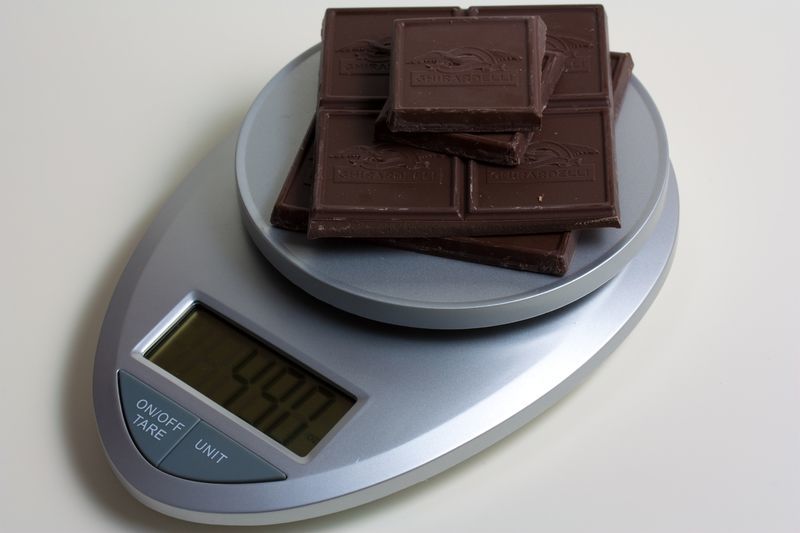
North Americans are the only people on earth that measure baking ingredients by volume: cups, Tablespoons and teaspoons. The rest of the world measures by weight which is significantly more accurate, having more benefit as your recipe scales up into larger quantities.
The advantage of measuring by volume is that it's
accurate enough in the small quantities found in home baking recipes. It also makes for quick measuring work because ingredients can be measured and scooped at the same time. That's a great example of American convenience at it's best.
But what do you do when you want pinpoint accuracy and/or you want to scale your recipe up by a factor of 10 for the next Worldwide Vegan Bake Sale? Do that with your recipe that's measured by volume and you're taking a huge gamble. I ended up losing this gamble when I owned my own baking company and scaled in this manner. It took me a while to realize why the consistency of my cookies weren't the same when I went from 20 to 400 cookie batches. 2 cups of sugar suddenly didn't measure out to be 20 cups of sugar like I thought it would once the recipe was scaled. This is where measuring by weight comes to the rescue.
While slightly more cumbersome because you have to measure everything, the beauty of measuring by weight is that your ingredients will always be accurate. Using flour from a different manufacturer or time of year? The 1.5 kilograms that you're measuring out will always equal the same amount of flour. If you own a baking company you're probably always baking different quantities of what you want on hand depending on demand. This is why it's important in these cases to convert your recipes to weight volumes early on so it's easy to scale when you need to. Below is a list of popular ingredients by weight to make this transition as easy as possible. The list below will be updated periodically as more data becomes available.
Chocolates By Weight
| Ingredient | Measurement | Weight |
| chocolate chips | 1 cup | 170 grams |
| cocoa powder | 1 cup | 85 grams |
Fats By Weight
| Ingredient | Measurement | Weight |
| oil, Vegan Butter, margarine, Vegan Shortening or store bought shortening, water and most liquids | 1 cup | 215 grams |
Flours By Weight
| Ingredient | Measurement | Weight |
| all-purpose flour | 1 cup | 128 grams |
| whole wheat flour | 1 cup | 128 grams |
| potato flour | 1 cup | 181 grams |
| bread flour | 1 cup | 128 grams |
| cornmeal (coarse) | 1 cup | 170 grams |
| rye flour (medium) | 1 cup | 102 grams |
| rye (pumpernickel) | 1 cup | 106 grams |
| quinoa flour | 1 cup | 110 grams |
| semolina flour | 1 cup | 163 grams |
| sorghum flour | 1 cup | 138 grams |
Fruits By Weight
| Ingredient | Measurement | Weight |
| raisins | 1 cup | 170 grams |
| raspberries | 1 cup | 120 grams |
Grains By Weight
| Ingredient | Measurement | Weight |
| rolled oats | 1 cup | 113 grams |
| quinoa, whole | 1 cup | 177 grams |
| quinoa, cooked | 1 cup | 184 grams |
Leaveners By Weight
| Ingredient | Measurement | Weight |
| active dry yeast | 2 ½ teaspoons | 7 grams |
| instant yeast | 2 ¼ teaspoons | 7 grams |
| baking powder | 2 Tablespoons | 28 grams |
| baking soda | 2 Tablespoons | 28 grams |
| sourdough or wild yeast sponge or barm | 1 cup | 198 grams |
Nuts By Weight
| Ingredient | Measurement | Weight |
| walnuts, chopped | 1 cup | 113 grams |
| walnuts, whole | 1 cup | 128 grams |
Sweeteners By Weight
| Ingredient | Measurement | Weight |
| agave syrup, molasses, maple syrup, barley malt, brown rice syrup, corn syrup | 1 ½ Tablespoons | 28 grams |
| granulated sugar | 2 Tablespoons | 28 grams |
Salt By Weight
| Ingredient | Measurement | Weight |
| salt (kosher) | 7 teaspoons | 28 grams |
| salt (sea) | 6 teaspoons | 28 grams |